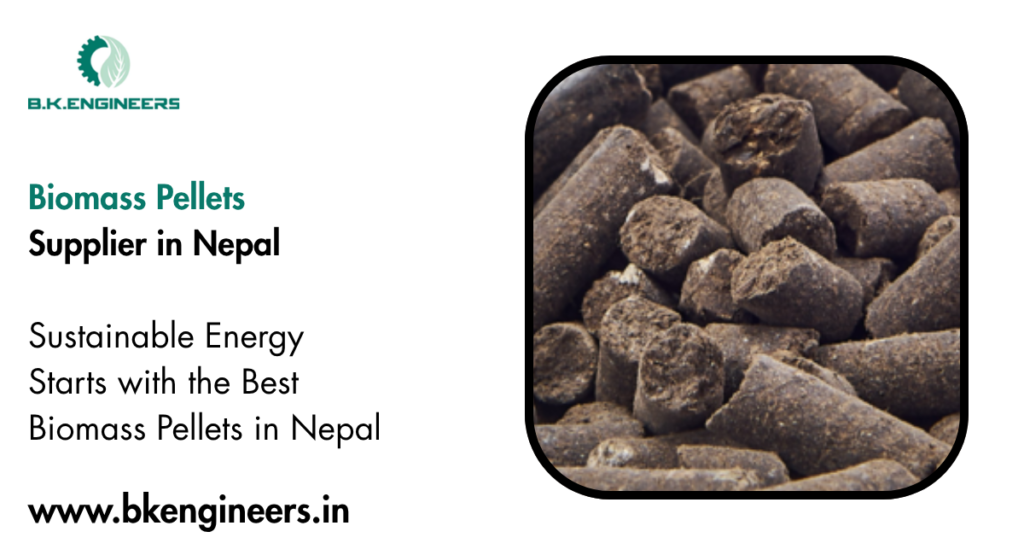
Biomass Pellets Supplier in Nepal
Introduction
At B.K. Engineers, we specialise in manufacturing a wide range of mills designed to meet your diverse needs. Our expertise spans across Cattle Feed Mills, Poultry Feed Mills, Aquatic Feed Mills, Bran Pelleting Mills, Hull Pelleting Mills, Grass Pelleting Mills, Alfalfa Pellets Mills, Wood Pellets Mills, and Straw Pelleting Mills. With our state-of-the-art technology and commitment to quality, we ensure that you get the best equipment for your production needs.
Biomass pellets are now a great alternative fuel option in a world where energy demand is rising quickly, and environmental concerns are becoming more pressing. The need for biomass pellets is growing in Nepal due to its abundance of natural resources and emphasis on sustainable development. B.K. Engineers is your go-to partner if you’re looking for a trustworthy supplier of biomass pellets in Nepal. Finding sustainable and environmentally acceptable fuel alternatives has become more crucial than ever in the modern world, where energy consumption is expanding quickly. We are the best Biomass Pellets Manufacturer.
These pellets are a great renewable energy source because they are created from wood chips, agricultural waste, and other organic materials. If you’re looking for a trustworthy supplier of biomass pellets in Nepal, B.K. Engineers stands out as a reputable brand that provides premium biomass pellets made to satisfy both household and commercial energy requirements. B.K. Engineers is one of the most reputable and trustworthy brands in this industry if you’re looking for a Biomass Pellets Supplier in Nepal. We supply premium biomass pellets that assist businesses in lowering fuel expenses and transitioning to sustainable energy sources.
What Are Biomass Pellets
- Biomass pellets are small, cylindrical pieces of compressed organic material. They are used as fuel in boilers, furnaces, and heating systems. These pellets are an excellent alternative to coal, diesel, and other fossil fuels. We are the best Biomass Pellets Provider.
- Made from natural waste materials
- High burning efficiency
- Low smoke and ash content
- Environmentally friendly
- Easy to store and transport
- These pellets are widely used as fuel in industries, boilers, power plants, and heating systems. They are considered a renewable energy source because they come from natural waste materials that can be replenished.
Why Choose B.K. Engineers
1. Eco-Friendly and Sustainable Fuel Source
- Biomass pellets are made from agricultural waste such as sawdust, rice husk, sugarcane bagasse, and other organic residues. This makes them a renewable energy source that helps reduce dependence on fossil fuels like coal, diesel, and furnace oil.
- Reduced carbon emissions
- Lower environmental pollution
- Better waste management of agricultural residues
- Sustainable energy consumption practices
2. Cost-Effective Energy Solution
- One of the biggest advantages of biomass pellets is their cost efficiency. Compared to conventional fuels, pellets are generally more affordable and stable in pricing.
- Competitive pricing due to local raw material availability
- Reduced transportation and import costs
- Bulk supply options for industries
- Long-term price stability compared to fossil fuels
3. High Energy Efficiency and Performance
- Modern biomass pellets are designed to provide high calorific value and efficient combustion. This means more heat output with less fuel consumption.
- High burning efficiency
- Low moisture content for better combustion
- Consistent heat output
- Reduced ash formation
4. Abundant Raw Material Availability in Nepal
- Nepal has a strong agricultural economy, producing large quantities of rice, wheat, maize, and other crops. This results in a continuous supply of biomass waste that can be converted into pellets.
- Easy access to raw materials
- Lower production delays
- Consistent supply chain
- Reduced dependency on imports
5. Supports Local Economy and Employment
- Choosing a biomass pellet supplier in Nepal also contributes to the local economy. The biomass energy sector helps generate employment opportunities in rural and semi-urban areas.
- Farmers can monetise agricultural waste
- Local manufacturing industries
- Transportation and logistics jobs
- Rural economic development
6. Reliable Supply for Industrial Applications
- Biomass pellets are widely used in:
- Boilers and steam generation systems
- Continuous bulk supply
- Cement industries
- Food processing units
7. Reduced Carbon Footprint for Businesses
- Many companies today are shifting toward sustainable operations. Biomass pellets help businesses significantly reduce their carbon footprint and meet environmental regulations.
- Lower greenhouse gas emissions
- Cleaner combustion process
- Compliance with environmental standards
- Improved brand image as a green company
8. Easy Storage and Handling
- Biomass pellets are compact, uniform in shape, and easy to store. Unlike traditional fuels, they do not require complex storage infrastructure.
- Less storage space requirement
- Easy transportation
- Minimal spillage and wastage
- Safe handling compared to liquid fuels
9. Consistent Quality and Standardisation
- A professional biomass pellets supplier in Nepal maintains strict quality control measures to ensure uniformity in size, moisture content, and energy output.
- Stable combustion performance
- Reduced maintenance of equipment
- Longer lifespan of boilers and systems
- Predictable energy output
10. Growing Renewable Energy Market in Nepal
- Nepal is steadily moving toward renewable and alternative energy solutions. Biomass energy plays a key role in this transition, supported by government initiatives and increasing awareness.
- National renewable energy goals
- Sustainable development practices
- Future-ready energy solutions
Applications of Biomass Pellets
1. Industrial Heating Applications
- One of the largest uses of biomass pellets in Nepal is in industrial heating systems. Industries such as textiles, cement, paper, brick kilns, and food processing require a continuous and stable heat source for their operations.
- Boilers for steam generation
- Industrial furnaces
- Drying systems for raw materials
- Heat treatment processes
2. Power Generation and Energy Plants
- Biomass pellets are widely used in small to medium-scale power plants for electricity generation. In Nepal, where hydropower is dominant but seasonal fluctuations can create energy gaps, biomass energy provides a stable backup solution.
- Biomass-based power plants
- Co-firing with coal in thermal plants
- Decentralised rural energy systems
3. Commercial Heating Systems
- Hotels, hospitals, educational institutions, and commercial complexes in Nepal are increasingly shifting toward biomass pellet-based heating systems.
- Central heating systems
- Hot water boilers
- Kitchen cooking systems in large hotels
- Laundry steam generation
4. Brick Kiln Industry
- The brick manufacturing industry in Nepal is one of the largest consumers of fuel energy. Traditionally dependent on coal and wood, many brick kilns are now transitioning to biomass pellets.
- Uniform heat distribution
- Reduced smoke emissions
- Improved working conditions
- Compliance with environmental regulations
5. Agricultural Applications
- Agriculture is a key sector in Nepal, and biomass pellets are increasingly being used in agro-based processing.
- Crop drying systems
- Greenhouse heating
- Food dehydration units
- Animal feed processing industries
6. Domestic Cooking and Heating
- In rural and semi-urban areas of Nepal, biomass pellets are being adopted as a clean cooking fuel alternative.
- Pellet stoves
- Household heating systems
- Small-scale cooking units
7. Hospitality and Tourism Sector
- Nepal’s tourism industry, including hotels, resorts, and lodges, especially in mountainous regions, relies heavily on heating solutions during cold seasons.
- Guest room heating
- Kitchen operations
- Hot water supply systems
8. Power Generation and Renewable Energy Projects
- Biomass pellets are also used in small-scale power plants and renewable energy projects. These plants convert pellet fuel into electricity through combustion or gasification processes.
- Renewable energy production
- Reduced dependence on imported fossil fuels
- Sustainable rural electrification
Specifications Table of Biomass Pellet
| Parameter | Specification Range |
|---|---|
| Material | Biomass Pellet |
| Diameter | 6 mm – 10 mm |
| Length | 10 mm – 30 mm |
| Moisture Content | Less than 10% |
| Ash Content | 2% – 5% |
| Calorific Value | 3800 – 4500 Kcal/kg |
| Density | 600 – 700 kg/m³ |
| Color | Light to dark brown |
| Packaging | 25 kg / 50 kg / Bulk Bags |
Benefits of Biomass Pellets
1. Renewable and Eco-Friendly Energy Source
- Biomass pellets are made from agricultural waste like rice husk, sawdust, wood chips, corn stalks, and other organic materials. This makes them a completely renewable fuel source.
- Reduces dependence on fossil fuels
- Helps in recycling agricultural waste
- Produces lower carbon emissions
- Supports environmental protection
2. Cost-Effective Fuel Solution
- One of the biggest advantages of choosing a biomass pellet supplier in Nepal is cost savings.
- Lower price compared to coal, diesel, and LPG
- Stable fuel costs less market fluctuation
- Reduces industrial operating expenses
3. High Efficiency and Better Heat Output
- Biomass pellets are highly efficient because they are compressed and have low moisture content.
- High calorific value, good heat generation
- Clean and stable burning
- Suitable for boilers, furnaces, and industrial heating systems
4. Reduces Pollution and Carbon Footprint
- Another major benefit is environmental protection.
- Low smoke and ash production
- Reduces greenhouse gas emissions
- Helps industries meet pollution control standards
- Supports carbon-neutral energy usage
5. Easy Storage and Transportation
- A good biomass pellet supplier in Nepal ensures properly processed pellets that are easy to handle.
- Compact size makes storage simple
- Requires less warehouse space
- Less dust and cleaner handling
6. Suitable for Multiple Industries
- Biomass pellets supplied in Nepal are widely used in.
- Textile industries
- Food processing plants
- Boilers and steam generation units
- Cement and chemical industries
7. Supports Nepal’s Local Economy
- Using local biomass pellet suppliers benefits the national economy.
- Uses local agricultural waste
- Creates rural employment
- Reduces dependency on imported fuel
- Strengthens local energy production systems
8. Improves Industrial Productivity
- Reliable fuel supply ensures uninterrupted production.
- Consistent energy output
- Reduced machine downtime
- Better combustion efficiency
- Smooth industrial operations
9. Encourages Waste Management
- Biomass pellet production helps in managing agricultural waste effectively.
- Reduces open-field burning of crop residues
- Converts waste into useful energy
- Supports circular economy practices
Types of Biomass Pellets
1. Wood Biomass Pellets
- Wood pellets are made from sawdust, wood chips, and forestry waste.
Features:
- High calorific value
- Clean burning with low ash
- Ideal for heating and boilers
2. Agricultural Biomass Pellets
- These pellets are made from crop residues like rice husk, wheat straw, corn stalks, and sugarcane bagasse.
Features:
- Easily available raw materials in Nepal
- Cost-effective
- Renewable and sustainable
3. Sawdust Pellets
- Sawdust pellets are made from fine wood waste collected from sawmills.
Features:
- Uniform burning
- Low moisture content
- High energy output
4. Industrial Biomass Pellets
- These are specially designed pellets for heavy industries and large-scale energy production.
Features:
- High density
- Long burning time
- High efficiency
5. Mixed Biomass Pellets
- Mixed pellets are made using a combination of wood waste and agricultural residues.
Features:
- Balanced cost and performance
- Flexible raw material usage
- Suitable for multiple applications
Conclusion
Biomass pellets are an excellent alternative to traditional fossil fuels. They are clean, renewable, cost-effective, and widely used in different industries. In a country like Nepal, where energy demand is increasing, biomass pellets are becoming an essential part of sustainable development. We are the best Biomass Pellets Provider in Hetauda.
If you are looking for a Biomass Pellets Supplier in Nepal, then B.K. Engineers are your trusted partner. We are committed to delivering high-quality biomass pellets that help industries save costs and support environmental sustainability. Government support for renewable energy and green initiatives will further boost the demand for biomass suppliers like B.K. Engineers.